
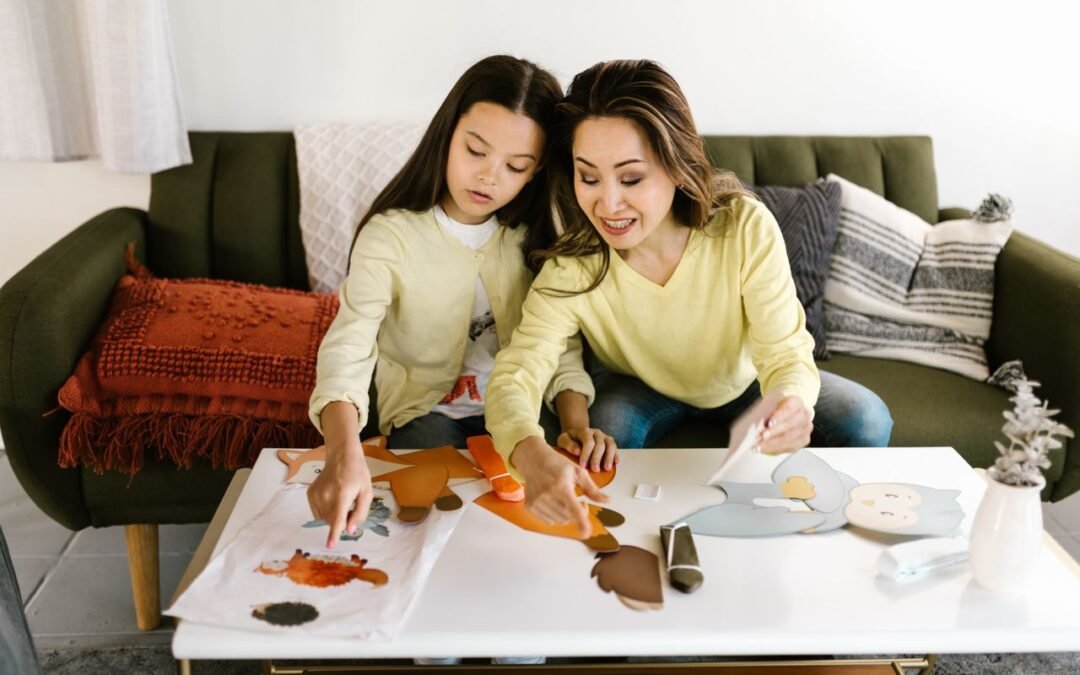
Picture a warm October afternoon in Los Angeles. Your two-year-old is asking for “leaves,” and all you have is a few crunchy ones from the sidewalk. That’s enough. Autumn art activities preschool kids enjoy most are usually the simplest: one material, 10-15 minutes, washable supplies with an AP seal, and a child who decides what happens on the paper. Below you’ll find easy fall crafts for preschoolers, ideas for older kids, and a few safety notes.
What each age can handle. Scribbling usually starts around 12-18 months, so for the youngest an adult holds the paper steady and tearing beats cutting. Around age 2 the scribbles become controlled, and by about 3 a child’s marks may start to stand for something, like a circle with legs for a person. By 4-5 scissors, glue bottles and two-step projects are realistic. Whatever the age, look for an AP seal on the label, because “non-toxic” alone means nothing official. Children under three put things in their mouths, so supervise every minute.
Fall crafts for toddlers and preschool fall crafts: match the project to the age
We lean hard toward process art, especially for toddlers. In process art the child explores materials with no sample to copy, and the experience matters more than the result. A product craft asks a child to carry out an adult’s picture of a scarecrow. Both have value, but fall crafts for toddlers work best when they’re mostly process, because a product craft demands skills they don’t have yet. Process art can also support expressive language, social and emotional skills and thinking skills, which is a lot to get from a sheet of paper and some paint.
For a 12-24-month-old, the goal is sensory. Tape a big sheet of paper to the floor, put out washable finger paint in red and yellow, and let the whole arm sweep. Toddlers start with big arm movements and only later refine wrist and finger control, so a large surface is a feature, not a mess risk. When red and yellow blend into orange, you’ve given a colour-mixing lesson without saying a word. Painter’s tape is the other low-skill winner: lay strips across the paper, let the child paint over them, then peel the tape off for a pattern they “made.” Handprint and fingerprint trees work the same way. Keep the outline simple, because a complicated picture sets a toddler up to feel stuck.
At 2-3, the grip starts to look like a pencil grip. This is the sweet spot for fall arts and crafts for preschoolers that use tearing: tissue paper or leaves ripped by hand and glued down with a glue stick or white glue. It’s also the age for leaf rubbings and for stamping with apple halves dipped in washable paint. Press, lift, repeat, and let the child decide how many stamps the paper needs.
Autumn art projects preschool children can finish: ages 3 to 5
From about 3 to 5, children draw pictures of objects and people, and their drawings tell stories with growing detail. By age 4 most children can draw a person with three or more body parts. That opens up preschool fall art with a bit more structure:
- a paper-plate hedgehog with torn-paper spikes
- a pumpkin-seed collage on a pencilled pumpkin outline
- a tree with fingerprint leaves in a palette the child picks
Older preschoolers can handle scissors and multi-step techniques so a two-part project works well: paint the background today, glue on leaves tomorrow. These fall art projects for preschool also give you a natural conversation. Ask what the hedgehog is doing, where it lives, what it eats, and write down the answer in the child’s own words.
Pumpkin seeds need a prep note. Rinse them, dry them completely, and only then glue, otherwise they stay slimy and smell. If a toddler still mouths everything, drop seeds, beads and anything small, keep to paper, paint and a glue stick, and stay within arm’s reach.
Fall art crafts for kindergarten and pre k fall crafts
By kindergarten, simple fall crafts can turn into small projects like a leaf-print book, a stamped apple orchard scene, or a collage with a title the child dictates to you. Fall art crafts for kindergarten can focus on stories, like a leaf animal with a name and a tale. Fall art projects for kindergarten work best with a clear first step the child can start alone, and a child can repeat the same idea across a week with a new twist each day. Fall art activities for kindergarten can include scissors, glue bottles and multi-step plans, with the same safety rules as for younger children. Autumn art activities for kindergarten suit classrooms and home tables alike, and pre k fall crafts can follow the same rhythm with a little more help from an adult.
Fall art activities for preschoolers don’t need a maple tree, just a short leaf hunt
Los Angeles has mild autumns and few trees that change colour dramatically, which makes a leaf hunt feel like a treasure hunt. Families can gather leaves at the LA County Arboretum, Descanso Gardens or around Echo Park Lake. Pick recently fallen ones, since very dry leaves crumble in small hands, and lay them on paper towels at home for a short while to dry briefly.
The walk is part of the activity. Talk about colours, shapes, the crunch underfoot and why the seasons change. Picture books pair well with leaf projects, and parents recommend Fletcher and the Falling Leaves, We’re Going on a Leaf Hunt and Mouse’s First Fall.
Leaf rubbings are among the best autumn arts and crafts for preschoolers, and toddlers can join in. Put a flat leaf with strong veins under thin paper, peel a crayon and rub with its side. For 12-24-month-olds, the adult steadies the paper while the child rubs. If the veins won’t show, swap the leaf, not the child. Fresh leaves do curl within about a week, so either treat the craft as short-lived or plan to preserve the leaves.
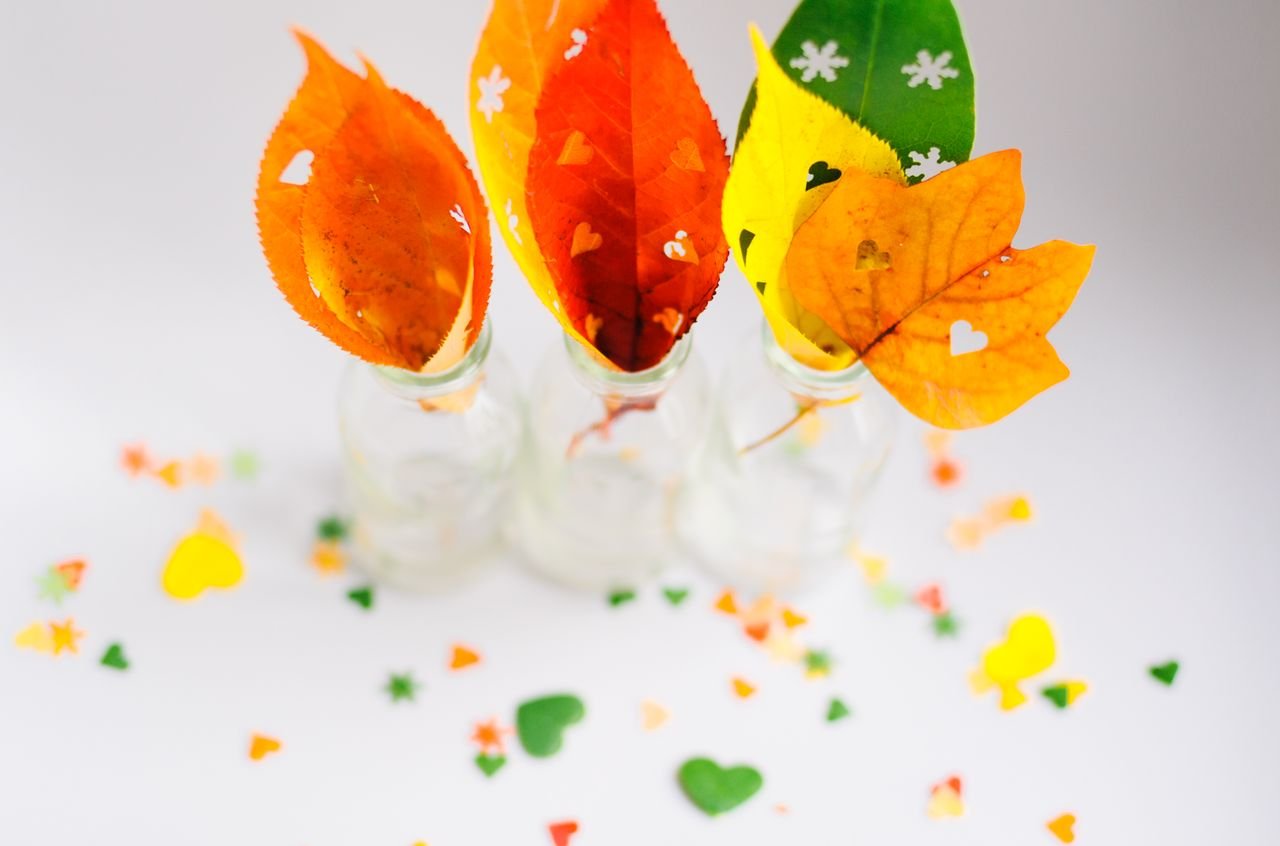
Here is a zero-setup idea for the walk itself: wrap a strip of tape loosely around your toddler’s wrist, sticky side out, so they can press on small finds as they go. It works like a bracelet, and no glue is needed. Keep a close eye on anything small near the mouth.
Paint choice changes the whole afternoon. Washable, pre-mixed paint treats the child as a real artist and makes cleanup realistic for you. Does process art have to be messy? No. A taped-down sheet, a smock and a small tray of paint keep things contained.
Other fall craft activities for preschoolers need almost no prep: a sensory bin with leaves, acorns and pinecones, fall-coloured playdough (homemade is fine), or apple-half stamping on a paper plate to make an apple pie. Older children can grow this into a leaf-print story: stamp, then ask what happened to the tree. Their answer becomes the caption.
Easy fall crafts for preschoolers: AP-sealed supplies, ten-minute bursts and a hands-off adult
Start with the label. The ACMI AP (Approved Product) seal means a product has been certified non-toxic: it doesn’t contain materials in amounts large enough to cause short- or long-term health problems. A CL seal (cautionary labeling) marks products that can cause harm if misused, such as glazes, spray paint and rubber cement, and ACMI recommends children in grade 6 or lower not use them. The plain word “non-toxic” has no official meaning unless it comes with AP or CPSIA certification, so check for the seal every time.
Most art supplies aren’t poisonous, but they can be a choking hazard, and children under three are the most likely to taste and choke on them. Take “not for children under three” warnings seriously. Childcare guides recommend avoiding glitter, small beads, uncooked beans, permanent or scented markers, powdered tempera and rubber cement for this age group. Powdered tempera dust can harm lungs and eyes, so pick pre-mixed water-based paint. Raw kidney beans are toxic, and nuts can cause allergic reactions and choking. White glue, washable markers, large crayons and homemade playdough are a safe backbone for toddlers. Set one rule: no eating or drinking during art time, including “just a snack.” If something is swallowed, a US poison centre can be reached on 1-800-222-1222.
Now time. Plan on about 10-15 minutes of sustained attention for a toddler or young preschooler. That’s not a failure of the activity, it’s the age. Link short bursts instead: paint for ten minutes, go outside, come back later to glue. One idea spread over a day beats one huge session, and this is the heart of good autumn art projects preschool families can do at home. Classroom-friendly projects for kindergarten work the same way, just with slightly longer blocks.
Your own role matters more than the supplies. Narrate instead of correcting: “You’re pressing really hard with your whole hand” gives a child vocabulary and tells them you’re paying attention. Don’t model a “right” result. If you want more conversation between children, limit the tools: two children and one brush create more talk than two children and four brushes. Some struggle is part of the value, because many children will struggle at some point and that is part of how they learn. And if you catch yourself redoing their page, make your own craft beside them. Tomorrow’s leaf book will survive.

Autumn art activities preschool families can follow with a no-horror escape room
If the crafts are finished, the weather is mild and you want out of the house, a finite, structured outing fits well. LA families often plan it as a park in the morning, lunch, then something indoors in the afternoon. At Maze Rooms we have six locations across Los Angeles and more than twenty private rooms. Our family-friendly games use adventure and fantasy themes with no horror. Preschoolers take part alongside adults: they enjoy the sets, props and textures while the grown-ups handle the puzzle logic. It’s a bigger version of the craft table, sensory and hands-on, where a small child can move at their own pace.
Games last about 60 minutes, or about 60-70 minutes for a preschooler with engaged adults, and most are built for 2-8 players. For mixed-age groups we recommend Temple of Lost Gold at our Robertson location as a first game, and that spot is minutes from La Cienega Park, which suits the park-then-game plan. We suggest a private room for family groups, and our average rating across LA locations is 4.8 stars or higher on Google and Yelp, so you can read other families’ reviews before you choose. We also host birthday events, and a craft morning followed by a game is an easy way to build one.
Book a private family room at Maze Rooms
Pick the location closest to your park route and book a private family room. Mention that you’re bringing a preschooler, and start with Temple of Lost Gold if you’re heading to Robertson.

Our Locations & Rooms
Highland Ave
Robertson Blvd
Santa Monica Blvd
Playa Del Rey
Vermont Ave
Sepulveda Blvd
Ventura Blvd