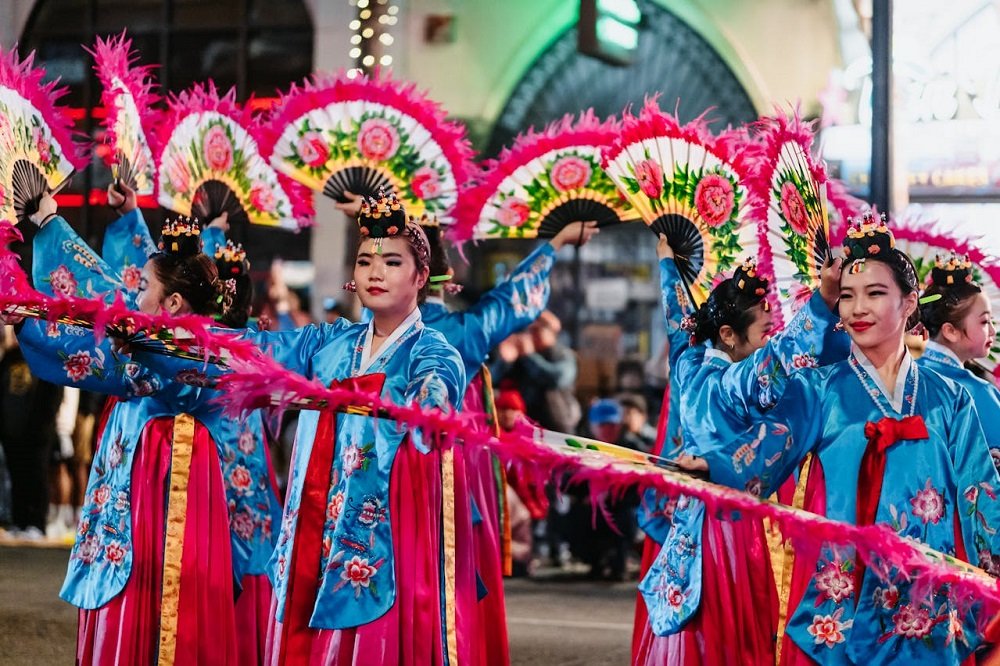
Los Angeles is home to the largest Asian American population of any city in the United States. That’s not a footnote — it’s the context for everything that happens here in May. Asian Pacific American Heritage Month lands differently in a city where Koreatown, Little Tokyo, Thai Town, Monterey Park, San Gabriel Valley, and a dozen other neighborhoods carry generations of lived Asian American history in their architecture, their restaurants, their community organizations, and their annual calendars.
The month runs from May 1st to May 31st. The programming across los angeles in that window is dense, varied, and sometimes overwhelming to navigate from the outside. Film festivals, community gatherings, art exhibitions, cultural performances, food events, panel discussions, youth programming — the asian american events los angeles calendar for May is long enough that most people who engage with it pick a few anchors and build around them rather than trying to attend everything.
What matters is showing up with some intention. And knowing what the city is actually doing, rather than assuming the month is a quiet one.
Asian Pacific American Heritage Month Activities in Los Angeles — the Cultural Landscape
The Japanese American National Museum in Little Tokyo is probably the single institution that does the most consistent, highest-quality AAPI programming in los angeles across the month. May usually brings a significant schedule — exhibitions, community events, screenings, conversations that connect Japanese American history to the broader AAPI experience in ways that resonate well beyond the specific community. Little Tokyo itself carries its own atmosphere during the month. The buildings remember things. The Nisei Week Foundation’s presence is felt year-round, but May sharpens it.
The Korean Cultural Center LA, the Chinese American Museum, the Vietnamese American Museum of Art — these institutions run their own asian pacific american heritage month activities los angeles programming, and the variation between them reflects how genuinely diverse the AAPI category is. “Asian American” covers more than twenty distinct ethnic communities in los angeles alone, each with its own history of arrival, settlement, labor, discrimination, and cultural contribution to the city. The best programming during AAPI month tends to honor that specificity rather than flattening it.
For groups trying to build an AAPI month day rather than just attending a single event, the challenge is the same one that comes up around any cultural programming in LA: the events are spread across a large city, they peak and release, and the group needs something to do with the rest of the day. The cultural experience is the anchor. What surrounds it is the part that requires a plan.
Things to Do for AAPI Month in Los Angeles Beyond the Official Programming
The things to do for aapi month that get discussed most in group chats — art walks in Little Tokyo, the Night Market in various neighborhoods, film screenings, community food events — are all real and worth attending. But the things to do for aapi month that produce a full day rather than a two-hour event require a bit more architecture.
Several Maze Rooms locations sit in or near neighborhoods with significant AAPI community history and active May programming. The Vermont Ave location is within the geographic range of Koreatown, one of the most culturally active corridors in the city during May. The Highland Ave location sits close to Thai Town and Little Armenia. For groups building a AAPI month day around a neighborhood — starting with a community event, eating at restaurants in the district, finishing with an experience that keeps the group together — the proximity of these locations to the relevant cultural geography is a practical advantage.
Maze Rooms has twenty-plus rooms across six LA locations, open daily from 10AM to 11PM. Prices start at $37 per person. The private room format means a group of 6 to 8 people has the space entirely to themselves, which matters when the group is already in a specific social mode from the cultural event they came from. The clock starts, the room absorbs the group’s attention, and for 60 to 70 minutes the shared problem of getting out replaces whatever the group was doing before.
AAPI Events Los Angeles — How Escape Rooms Fit Into a Community-Oriented Day
This connection might not be obvious at first. But escape rooms in los angeles — specifically the format where a private group works together through a narrative-based puzzle experience — share structural DNA with the kind of community and family gatherings that AAPI month tends to produce.
Multi-generational groups. Mixed familiarity with each other. People who want to do something together rather than just be somewhere together. These are the group configurations that escape rooms handle better than most activity formats. The room doesn’t require a shared background or a uniform level of prior experience. It requires presence. And it produces the kind of shared reference — the moment when someone solved the thing nobody else could see, the wrong turn that cost the group four minutes, the last 30 seconds on the clock — that becomes conversational material for the rest of the evening.
For families with AAPI heritage celebrating a May birthday, or for companies with significant AAPI employee communities using the month as an occasion for a team event, the Maze Rooms format sits cleanly within the broader context of the month. Not because the rooms themselves have AAPI themes — they don’t, and it would be a stretch to claim otherwise — but because the shared experience of navigating something together is a fitting way to extend a day that started with something culturally significant.
AAPI Events Los Angeles — What’s Actually Happening Across the City in May
Aapi events los angeles in May run across multiple districts simultaneously, and the concentration varies. The San Gabriel Valley hosts the densest cluster of AAPI community events outside of the main cultural institutions — the Chinese and Taiwanese American communities there have built a cultural infrastructure over decades that becomes visible in May in ways it isn’t always visible the rest of the year. Monterey Park, Alhambra, Arcadia — these cities run their own programming, and it tends to be more embedded in actual community life than the larger, more public-facing events closer to downtown.
Little Tokyo is the most accessible entry point for people who aren’t already connected to a specific AAPI community. The neighborhood runs May programming that is genuinely open, well-organized, and doesn’t require insider knowledge to navigate. The Japanese American Cultural and Community Center, Nisei Week events, the museum programming — these all assume a curious general audience as well as a community audience, and the experience of being in Little Tokyo during AAPI month carries something that’s hard to replicate in a more generic setting. The sounds change. The pace changes. The storefronts tell a different story than what you’d find a mile away.
Aapi los angeles events in Koreatown run differently — more spread across the neighborhood’s existing rhythms, less concentrated in a single cultural district, but no less real. The LGBTQ+ Asian community, Korean American civic organizations, and arts spaces like the Korean Cultural Center all contribute programming. For groups based on the Westside or coming from the South Bay, Koreatown sits in the geographic middle of the city, which makes it a natural meeting point.
What Maze Rooms Looks Like — the Facilities in Specific Terms
The Robertson Blvd location is the flagship in terms of room variety and reception capacity. Multiple rooms run simultaneously for larger groups, the reception space handles food and decoration, and the room catalog covers a wide enough range that a group selecting together tends to find something that feels chosen rather than defaulted to. Area 51 pulls groups with an investigation and conspiracy instinct — the set design holds up under the kind of close inspection that curious players apply. Ghost Hunters runs darker. Sherlock Holmes and Beautiful Mind rewards logical thinking specifically, which creates a different dynamic than rooms that primarily reward physical searching.
The Culver City location on Sepulveda carries Cyberpunk Samurai, a room that references visual and aesthetic traditions from Japanese pop culture without reducing them to cliché — the neon and detail feel considered rather than surface-level. Spy Dogs runs with a different energy. Men in Suits is the hard room at this site, recommended for groups that want to feel properly challenged rather than comfortably guided through.
West LA on Santa Monica Blvd houses Something’s Out There, the horror room that keeps appearing in serious reviews for its precise management of atmosphere and tension. Not actors. Not cheap scares. Something more considered — technology and staging working together to produce a sustained unease that pays off in the final sequences. Whatever Happened to the Garretts at the same location runs as a mystery-thriller rather than horror, different emotional register, suits groups who want something with narrative weight but not fear specifically.
Vermont Ave runs Lunar Mission (70 minutes, hard, up to 6 players) and Magic Kingdom and The Abyss — three rooms that between them cover the range from fantasy to sci-fi to psychological puzzle. Highland Ave has World of Illusions and Pharaoh’s Tomb, both rated for more experienced audiences. The rooms across all six locations are built rather than dressed — physical detail, real texture, sets that feel inhabited rather than installed.

Why Maze Rooms Works for AAPI Month Group Events
Honestly, the case is straightforward. AAPI month in los angeles produces a specific kind of group energy — people who’ve been to something meaningful, who are in a particular social mode, who want to stay together and do something rather than disperse into separate car rides home. Escape rooms in los angeles serve that specific need well because the format extends a shared day rather than replacing it. The cultural event is the first part. The escape room is the second. Dinner somewhere in the neighborhood is the third. The day has shape.
For corporate groups using AAPI month as an occasion for team programming — which is increasingly common in LA companies with significant Asian American employee populations — the Maze Rooms format handles the “after the panel discussion, what do we do” problem cleanly. Half-day and full-day corporate formats are available. Multi-room setups create team competition structures that suit the energy of a group that’s been in a more formal context earlier in the day.
For family events — multi-generational AAPI month birthdays, community group gatherings, youth group outings — the private room format is the key variable. No strangers mixed in. The group that arrived is the group that plays. The experience belongs to the people in it rather than being shared with whoever else happened to book the same time slot.
Things to Do for AAPI Month That Leave Something Behind
What the best aapi los angeles events share — the ones that get referenced in conversation months later — is that they produced a moment of actual shared experience rather than just shared presence. A film that the group watched and discussed afterward. A performance that surprised people. A community gathering where something was said that changed how a few people in the room understood something.
Escape rooms don’t claim that kind of cultural weight, and they shouldn’t. But they do produce the specific quality of shared narrative that makes a group’s AAPI month day into a story rather than a schedule. Someone figured out the puzzle. Someone else held the flashlight at exactly the wrong angle for twelve minutes. The clock ran out on one team while the other escaped with four seconds left. These are small things. But small things are the texture of a day that gets remembered.
Six locations across los angeles. The month is May. The city is doing something with it — and the day is worth planning all the way through, not just to the end of the first event.